
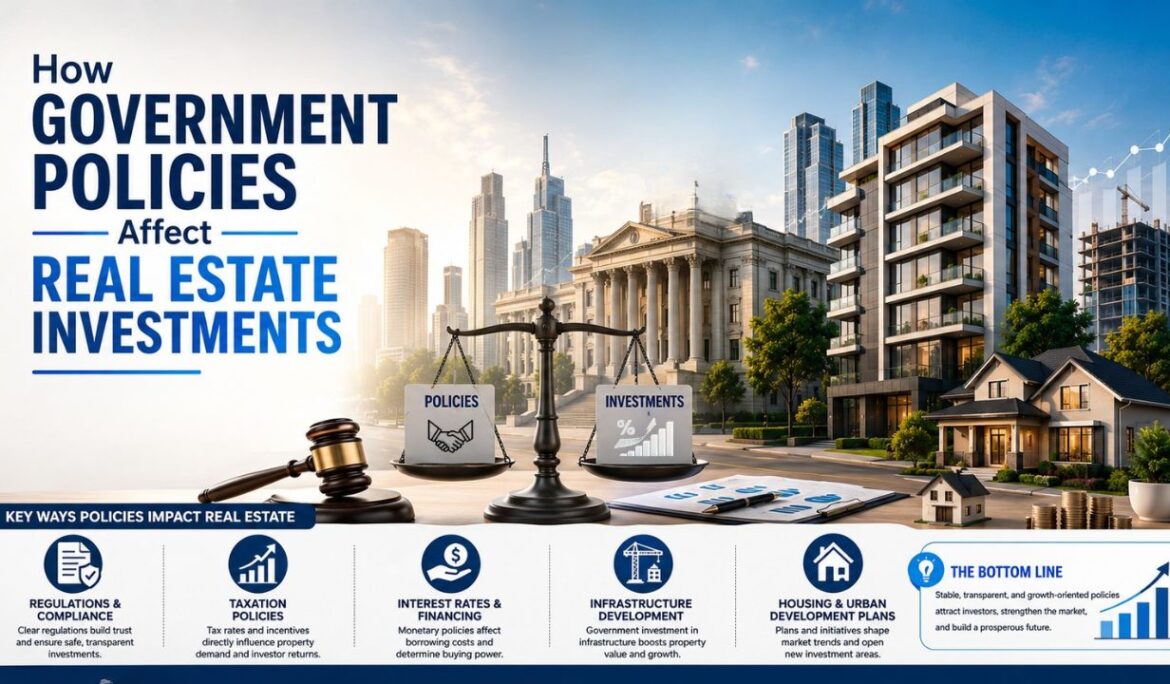
Policy choices—from taxes and interest rates to infrastructure projects and housing regulations—directly affect property values, investment prospects, and consumer confidence.
This piece discusses how government regulations influence the real estate industry and why buyers, sellers, and investors must keep current on policy developments.
Interest Rates and Rules for Mortgages
The interest rate established by the central bank is among the most important government-related elements. Low interest rates allow banks to offer more affordable home loans, thereby enabling individuals to purchase real estate. Property values usually rise in tandem with demand.
On the other hand, higher interest rates increase borrowing costs, thereby reducing buyers’ affordability. This could postpone real estate sales and cause prices in certain areas to rise.
Property Taxes and Government Levies
On real estate deals, governments gather many different taxes and charges. These could consist of:
- Taxes on property transfers
- Capital gains levies
- Stamp fees
- Yearly real estate taxes
Rising taxes raise the general cost of purchasing and selling real estate; tax cuts or exemptions can help to stimulate activity and motivate investment.

Rules and Regulations Governing Housing
Governments implement housing policies to regulate development, protect consumers, and improve affordability. These rules could consist of:
- Low-cost housing initiatives
- Building codes
- Laws governing zoning
- Planning of land use
- Construction safety guidelines
Such rules help to guarantee proper urban development while striking a balance between the interests of homeowners, communities, and developers.
Creating Infrastructure
Government spending on roads, highways, public transportation, schools, hospitals, and utility infrastructure usually drives up local property values. Better infrastructure attracts companies and people, thereby increasing the local area’s appeal for investment.
Many effective real estate developments see significant price appreciation following completion of large-scale infrastructure projects.
Government Responses and Inflation
Government economic measures affect inflation, employment, and general economic development. Usually, increasing consumer confidence and investment helps a robust economy boost the real estate industry.
Buyers may postpone their purchases during periods of economic instability or high inflation; developers may face higher construction costs.
Overseas Investment Rules
Many nations control foreign ownership of property. Policies that promote global investment will help drive demand for homes and businesses.
On the other hand, limits on overseas consumers will help local people’s affordability even as they help to lower demand in some parts of the market.
Urban Planning and Development
Governments sometimes start urban development projects to improve public services and allow cities to grow. These schemes mostly comprise:
- New programmes for housing
- Commercial areas
- Industrial areas
- Networks of public transportation
- Smart city developments
Properties close to these projects usually gain from rising demand and long-term value growth.
Legislation About the Environment and Sustainability
Governments are starting to set environmental requirements for the development of property and buildings. These guidelines could call for:
- Energy-saving homes
- Environmentally friendly building materials
- Waste management strategies
- Steps to conserve water
- Sustainable urban design
Although following standards may initially increase construction costs, environmentally sustainable homes typically have lower operating costs and greater long-term value.
Effect on Real Estate Buyers
Changes in government policy could have a big impact on investment returns. Good investors check frequently:
- Budget declarations
- Modifications to taxes
- Choice of interest rates
- Awards for houses
- Expenditures on infrastructure
- Regulations governing development
Knowing these elements helps investors spot opportunities and manage potential risks more effectively.
Advice for Prospective Property Owners
Before investing in real estate:
- Keep updated on fresh government laws.
- Plan infrastructure developments via a study.
- Know all the relevant laws and levies.
- Look closely at funding choices.
- If need be, check with knowledgeable legal and real estate experts.
Knowing about policy changes can help consumers avoid unexpected expenses and make better financial decisions.
Conclusion
From property values and finance to taxes and urban planning, government policies have a significant influence on every feature of the real estate industry. While some rules promote investment and boost the economy, some could slow down market activity or raise property costs.
Keeping tabs on government policies helps consumers, sellers, and investors make wise real estate decisions. Knowing how these policies affect the market will enable you to spot opportunities, mitigate risks more effectively, and create a profitable long-term property investment plan.